Tramadol is an important opioid medication used for the management of pain. But across Cameroon, its non-medical use has become part of a broader drug problem affecting young people, families, schools, workplaces, and communities.
The concern is not simply that people are misusing a prescription medicine. An equally important question is how a controlled medication continues to reach people without appropriate prescriptions or medical supervision.
Research from Cameroon suggests that tramadol remains particularly prominent in non-medical prescription drug use among young people. This raises concerns about dependence and other health consequences, while also exposing possible weaknesses in pharmaceutical distribution and regulatory enforcement.
Tramadol Has a Legitimate Medical Purpose
Tramadol is an opioid analgesic used to manage moderate to severe pain.
When appropriately prescribed, dispensed, and monitored, it can be an important component of patient care.
The problem begins when tramadol is taken without a prescription, used in larger amounts than prescribed, shared with others, or consumed for reasons unrelated to legitimate pain treatment.
Repeated misuse can lead to tolerance and dependence and can expose users to potentially serious adverse effects.
Young People Are Particularly Vulnerable
Studies conducted in Buea provide an important warning.
One study among secondary-school students found that 15.3% reported non-medical use of prescription drugs, with tramadol identified as the most commonly used prescription medication. More than half of those reporting misuse began between the ages of 15 and 17.
A separate study among youths and young adults in Buea found that 19.6% reported non-medical prescription-drug use during the previous 12 months. Opioids were the predominant class, and tramadol accounted for a significant proportion of reported use.
These findings suggest that tramadol misuse should not be viewed solely as an adult addiction problem. Prevention must begin early.
Why Are Young People Using Tramadol?
The reasons are complex.
Research in Cameroon has identified motivations including curiosity and the desire to improve work performance. Other reported patterns include use around social activities, sporting activities, examinations, and sexual activity.
This demonstrates why prevention campaigns should go beyond simply telling young people that drugs are dangerous.
Young people need to understand what tramadol actually does, why dependence develops, and why a medicine prescribed for pain can become harmful when used outside medical supervision.
The Health Consequences Can Be Serious
Non-medical tramadol use can expose individuals to significant health risks.
Potential consequences include:
- Drowsiness and impaired judgment
- Dizziness, nausea, and vomiting
- Seizures
- Dependence and withdrawal
- Altered consciousness
- Breathing problems
- Dangerous interactions with alcohol and other substances
- Overdose and potentially death
The risks can become even more unpredictable when tablets are obtained through illegal or unregulated markets, where consumers may have little assurance about the origin, strength, storage conditions, or contents of what they are taking.
The Bigger Question: If Tramadol Is Controlled, Why Is It Still So Accessible?
This may be one of the most important questions for Cameroon.
Tramadol is not an uncontrolled medication in Cameroon.
The Ministry of Public Health placed tramadol under national control in 2019 because of concerns about misuse and consumption without prescription. Its importation became subject to authorization from the Minister of Public Health, while importing organizations were required to report importation, exportation, and consumption statistics.
Yet research continues to document access outside appropriate prescription channels.
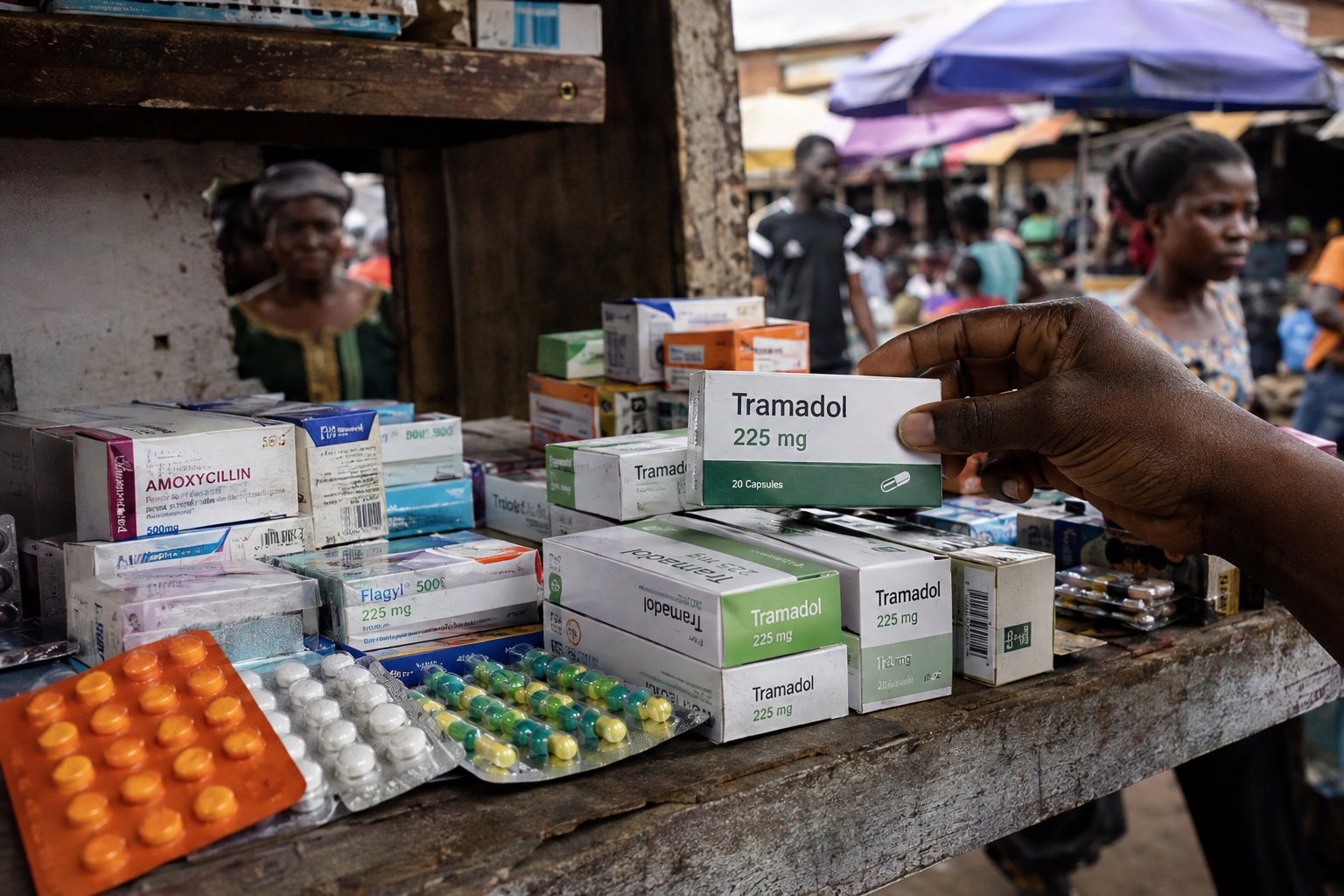
A 2024 study involving youths in Buea found that 72.2% of those reporting misuse said they purchased prescription drugs without a prescription. Unregistered pharmacies and roadside vendors were identified as major sources.
This raises an important policy question:
How does a controlled prescription medication move from regulated pharmaceutical channels into informal markets where young people can reportedly purchase it without a prescription?
A Legal Loophole or an Enforcement Gap?
It would be premature to conclude that Cameroon simply has a legal loophole allowing uncontrolled tramadol sales.
The evidence points to a more complicated problem.
Rules controlling tramadol already exist. The potential weakness appears to lie in enforcement, pharmaceutical supply-chain oversight, unauthorized medicine outlets, diversion, and the continued existence of informal markets.
Cameroon’s own National Strategic Plan to Fight Against Drugs 2024–2030 recognizes the need to update the regulatory framework, improve control and enforcement, and improve access controls for medicines containing narcotic and psychotropic substances.
The issue can therefore be understood as a potential regulatory and enforcement gap between what the rules require and what happens in practice.
Follow the Medicine
An effective response should not concentrate exclusively on the person caught with tramadol.
Authorities should also be able to determine how controlled medicines entered unauthorized distribution channels.
A strong pharmaceutical tracking system should help answer basic questions:
Where was the medication manufactured or imported?
Who was authorized to distribute it?
Which wholesaler received it?
Which pharmacy, clinic, hospital, or other authorized facility received the supply?
Were quantities appropriately documented?
And if legitimate pharmaceutical products entered an illegal market, where did the diversion occur?
Answering these questions could help authorities move beyond repeatedly confiscating tablets toward identifying weaknesses higher in the supply chain.
Unregistered Medicine Sellers Require Attention
Informal access is particularly concerning.
The Buea research identified unregistered pharmacies and roadside vendors as important reported sources of prescription drugs used non-medically.
Controlling legitimate pharmacies while leaving unauthorized medicine markets accessible would limit the effectiveness of pharmaceutical regulation.
Enforcement should therefore distinguish between legitimate healthcare professionals operating according to regulation and individuals or networks deliberately distributing controlled medicines outside authorized channels.
Pharmacies and Healthcare Professionals Are Part of the Solution
Healthcare professionals also have an important responsibility.
Patients receiving tramadol should understand why it has been prescribed, how much they should take, how long they should take it, significant adverse effects, and why the medication should not be shared.
Pharmacies should maintain appropriate dispensing controls and documentation for medicines subject to regulation.
Healthcare organizations can also examine prescribing patterns that may suggest inappropriate use or diversion.
Dependence Is Also a Healthcare Problem
Supply control is essential, but reducing availability alone will not eliminate drug dependence.
People who have developed dependence may require medical assessment, counselling, psychological support, treatment, rehabilitation, and assistance with social reintegration.
Cameroon’s Ministry of Public Health has increasingly recognized drug use as a public-health issue. In 2026, the Ministry was developing additional national harm-reduction strategies and tools intended to improve interventions for people who use drugs.
This represents an important shift from viewing every person who uses drugs primarily through a criminal-justice lens.
Enforcement alone is unlikely to address the underlying causes of drug dependence.
Parents, Schools, and Communities Have a Role
Prevention should begin before dependence develops.
Parents should have open conversations with adolescents about prescription medications rather than assuming that medicines obtained from pharmacies or medicine sellers are automatically safe.
Schools can incorporate age-appropriate substance-use education and establish confidential pathways for students who need help.
Communities can also help authorities identify unauthorized drug outlets while avoiding stigmatization of people struggling with dependence.
Technology Could Help Close the Gap
Digital pharmaceutical systems could become an important part of Cameroon’s response.
Electronic prescribing can make it more difficult to obtain certain medications using fraudulent or repeated prescriptions.
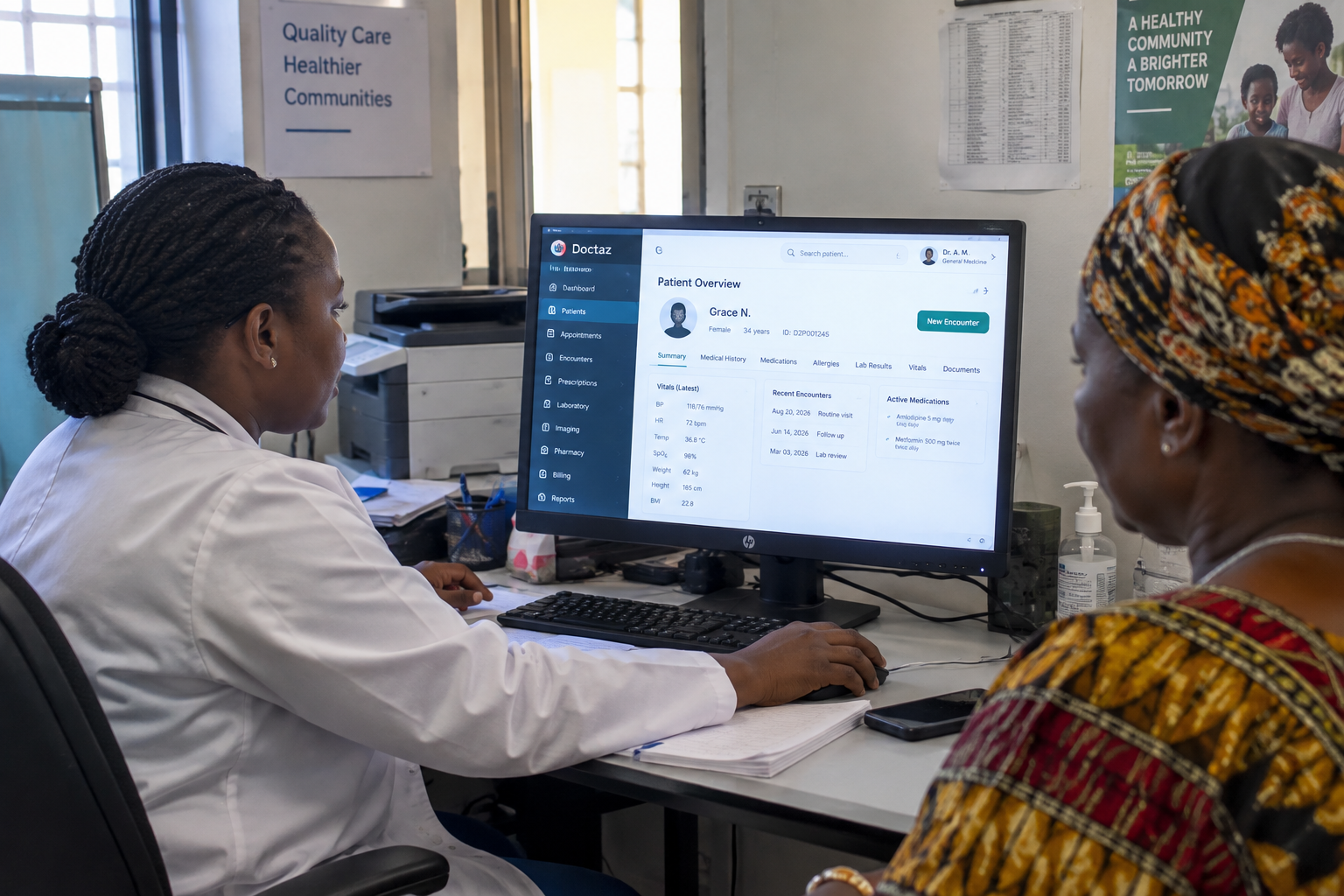
Digital pharmacy records can provide greater visibility into dispensing patterns.
Inventory systems can help track controlled medicines from authorized suppliers to healthcare facilities and pharmacies.
When properly designed, such systems can create alerts when unusually large quantities are ordered, dispensed, lost, or otherwise unaccounted for.
Technology will not eliminate trafficking, but greater pharmaceutical traceability can make diversion more difficult to conceal.
Cameroon Already Has a Framework for Action
Cameroon’s National Strategic Plan to Fight Against Drugs 2024–2030 aims to reduce both drug supply and demand.
Its priorities include improving control of licit drugs, updating the regulatory framework, improving enforcement, expanding prevention and treatment, reducing drug-related harm, and improving institutional coordination.
The framework therefore exists.
The challenge is translating policy into measurable changes in communities where young people can still reportedly obtain controlled prescription medicines through unauthorized channels.
The Question Cameroon Must Answer
Tramadol should remain available to patients who legitimately need appropriate pain management.
At the same time, young people should not be able to obtain a controlled opioid as casually as an ordinary consumer product.
Cameroon’s challenge is therefore to maintain access for legitimate medical care while preventing diversion, unauthorized sales, trafficking, and non-medical use.
The most important question may no longer be simply:
“Why are young people abusing tramadol?”
Cameroon must also ask:
“Where are they getting it, who is supplying it, and how is a controlled medication reaching the informal market?”
Finding those answers could help shift the response from repeatedly dealing with the consequences of tramadol abuse to addressing the systems that allow the problem to continue.
Tramadol misuse is not only an addiction problem. It is also a public-health, pharmaceutical-safety, regulatory, and supply-chain challenge.
Doctaz Healthcare News will continue to highlight drug-use trends, addiction prevention, pharmaceutical safety, and public-health developments affecting Cameroon and Africa.