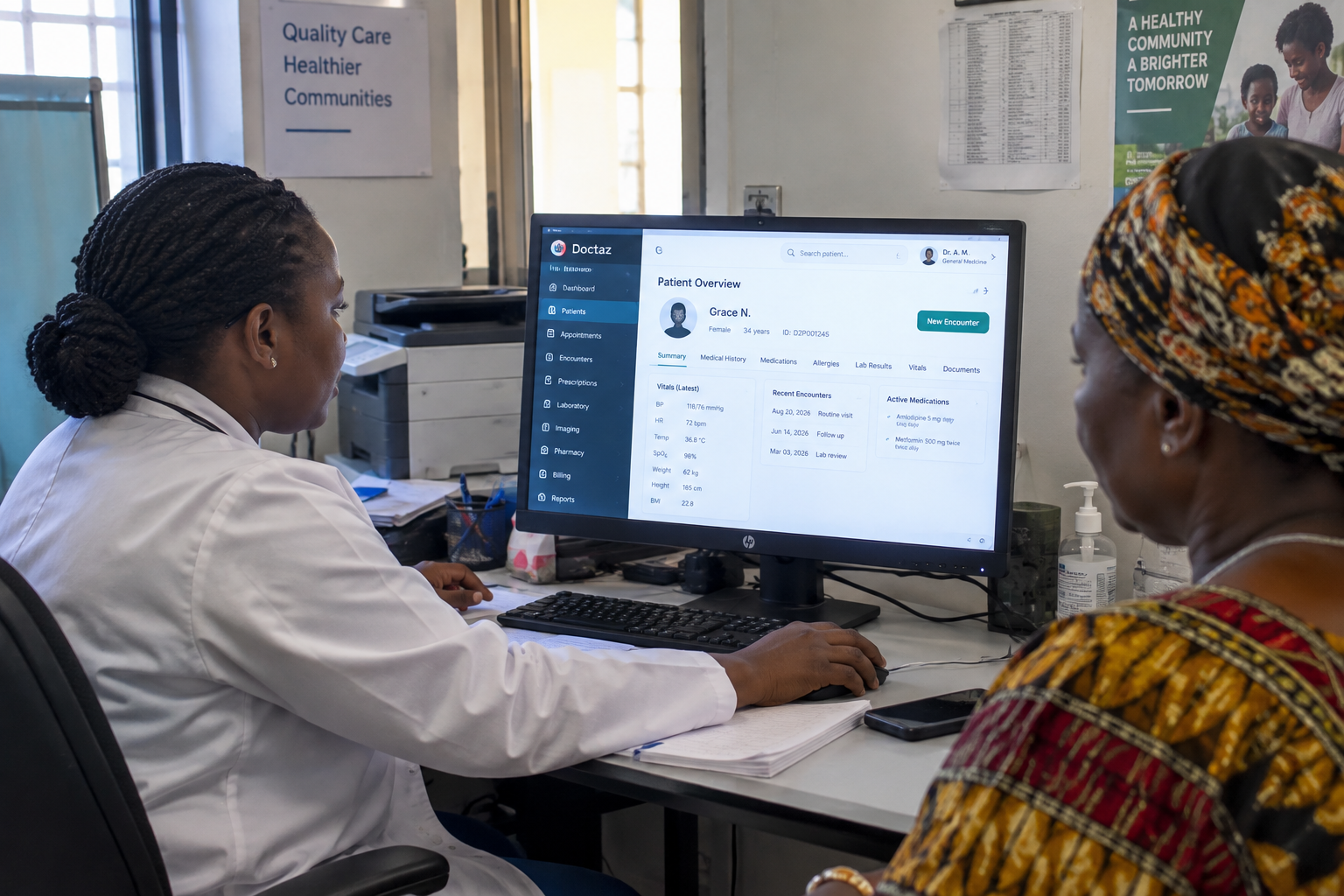
Every day, healthcare professionals dedicate themselves to caring for patients. Yet a surprising amount of their time is spent searching for patient records, completing paperwork, and entering the same information into multiple forms. These administrative tasks consume valuable time that could be spent delivering patient care.
While paper records once served healthcare well, today’s healthcare environment demands faster, safer, and more connected ways of managing information. As patient volumes grow and healthcare becomes increasingly complex, relying on paper-based or disconnected systems creates challenges that affect providers, staff, and patients alike.
The Hidden Cost of Paper-Based Healthcare
Paper-based healthcare systems may seem familiar and reliable, but they often create inefficiencies that impact the quality and speed of care.
Some of the most common challenges include:
- Longer patient waiting times
- Lost or misplaced medical records
- Documentation errors
- Delayed clinical decision-making
- Increased administrative workload
- Poor communication between departments
These issues do not only affect healthcare professionals. Patients also experience longer waits, repeated questions, delays in treatment, and unnecessary frustration. Over time, these inefficiencies increase operational costs and reduce overall productivity.
Why Digital Healthcare Matters
Digital healthcare is not about replacing healthcare professionals. It is about equipping them with better tools so they can spend less time on paperwork and more time caring for patients.
Modern healthcare platforms simplify daily operations by connecting essential clinical and administrative functions into one system. This allows providers to:
- Schedule appointments more efficiently
- Access patient records instantly
- Conduct secure telehealth consultations
- Coordinate care across healthcare teams
- Manage billing and payments
- Improve communication between providers
When healthcare information flows seamlessly, providers can make better decisions, reduce errors, and improve the patient experience.
The Future of Healthcare Is Connected
Healthcare organizations around the world are embracing digital transformation because it improves efficiency without compromising quality of care.
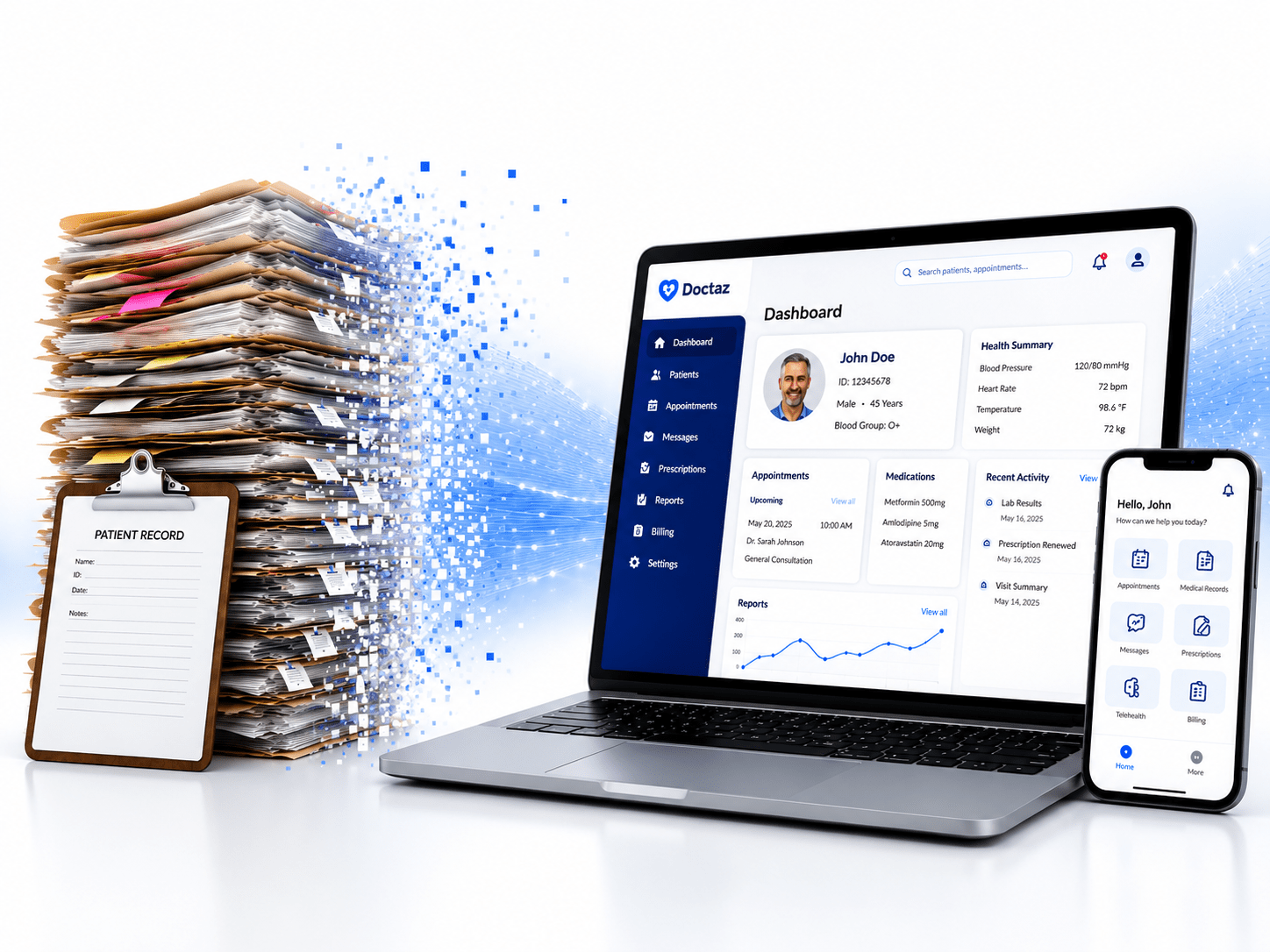
Instead of managing multiple disconnected systems, providers can work from a single platform that brings appointments, electronic health records, telehealth, billing, and care coordination together.
This connected approach reduces administrative burdens, streamlines workflows, and allows healthcare teams to focus on what matters most—providing exceptional patient care.
Digital transformation is no longer simply about adopting new technology. It is about creating a healthcare system that is more efficient, more connected, and better prepared to meet the needs of today’s patients.
How Doctaz Supports Digital Healthcare
At Doctaz, we believe healthcare should be simple, connected, and patient-centered.
Doctaz is an integrated Healthcare Management Operating System that helps healthcare organizations streamline operations by bringing appointment scheduling, electronic health records, telehealth, billing, and care coordination into one secure platform.
By reducing administrative complexity and improving access to information, Doctaz empowers healthcare providers to work more efficiently while delivering better patient outcomes.
Conclusion
Healthcare should never be slowed down by paperwork.
As healthcare continues to evolve, connected digital platforms will play an increasingly important role in improving efficiency, reducing administrative burdens, and enhancing patient care.
Every step toward digital transformation is a step toward a healthcare system that works better for providers, staff, and patients alike.
What challenges does your organization face with paper-based or disconnected healthcare systems? Share your thoughts in the comments—we’d love to hear your experience.