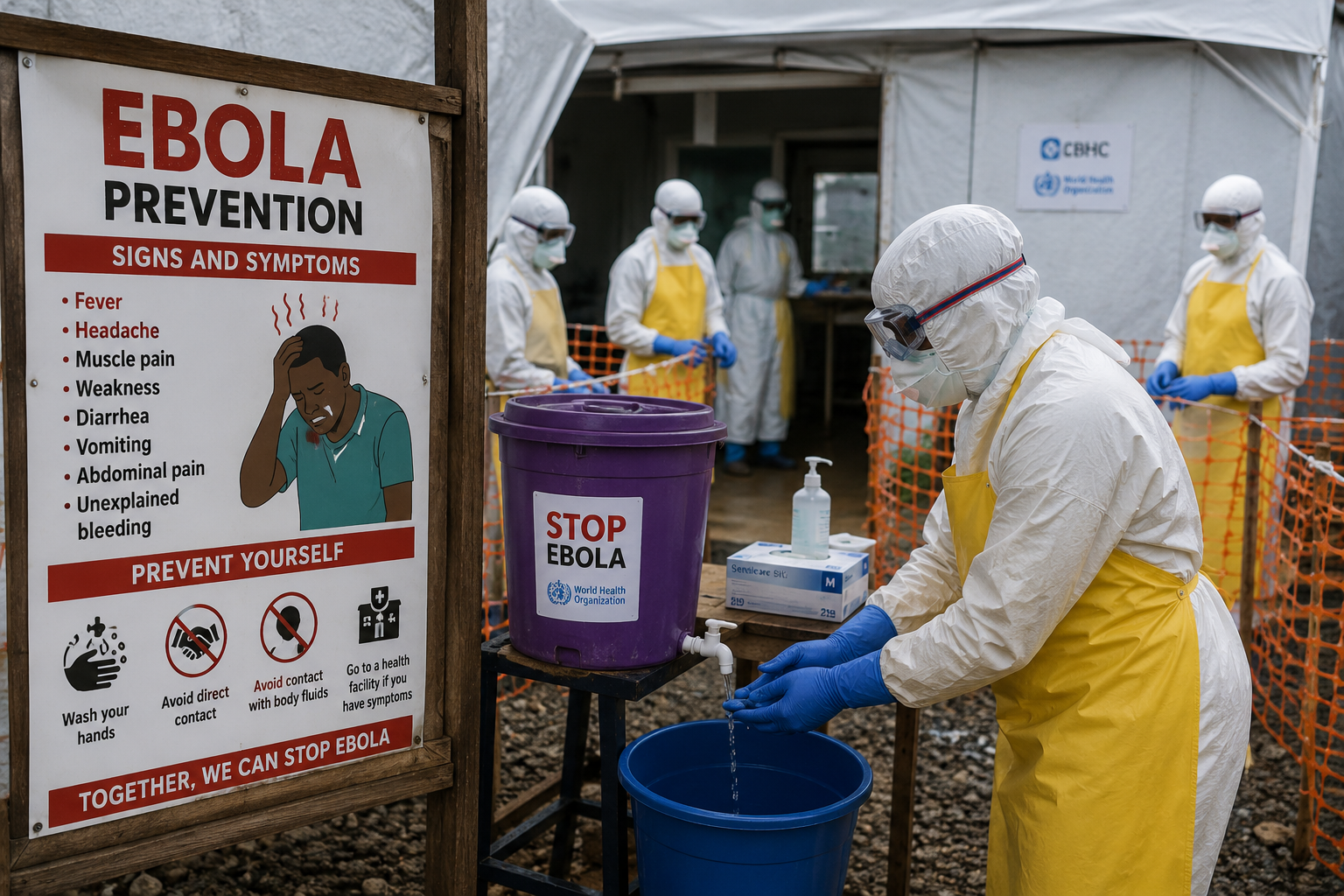
The ongoing Ebola outbreak in the Democratic Republic of the Congo (DRC) continues to expand, raising concerns about transmission within the country and the possibility of additional cases crossing international borders.
The outbreak is caused by Bundibugyo virus, one of the viruses capable of causing Ebola disease. According to the World Health Organization (WHO), 5,794 confirmed cases and 2,786 deaths had been reported in the DRC as of August 26, 2026. The outbreak has affected 60 health zones across six provinces, with a reported case-fatality ratio of approximately 48%.
WHO says the outbreak remains a Public Health Emergency of International Concern (PHEIC). The organization considers the risk within the DRC very high and the risk to countries sharing borders with the DRC high.
Why the Outbreak Is Concerning
Rapid identification and isolation of infected patients are essential for controlling Ebola. However, the response in parts of the DRC is complicated by insecurity, population movement, limitations in laboratory capacity and difficulties accessing some affected communities.
WHO has also warned that infections may be substantially underdetected. Its Emergency Committee reported that modelling suggests the actual number of infections could potentially be several times higher than reported. This remains an estimate rather than a confirmed case count.
Healthcare workers, families and communities can also face increased exposure when infected individuals are not identified quickly.
Vaccination and Research
Vaccination of some healthcare workers began in parts of the DRC on August 27 using the Ervebo vaccine. However, Ervebo is established for Ebola disease caused by Zaire ebolavirus, and it is not yet known whether it protects humans against Bundibugyo virus.
A clinical trial is therefore expected to help determine whether the vaccine can provide protection against the virus responsible for the current outbreak.
Regional Surveillance Remains Critical
Uganda officially ended its related Ebola outbreak on August 27 after completing 42 consecutive days without another confirmed case. Nevertheless, continued transmission in the DRC means neighboring countries must maintain surveillance and preparedness.
WHO currently advises against general restrictions on travel or trade with affected countries. Instead, authorities are emphasizing surveillance, testing, contact tracing, appropriate patient care, safe burials, community engagement and cross-border cooperation.
Doctaz Healthcare News will continue to monitor verified developments concerning the outbreak and regional public-health response.