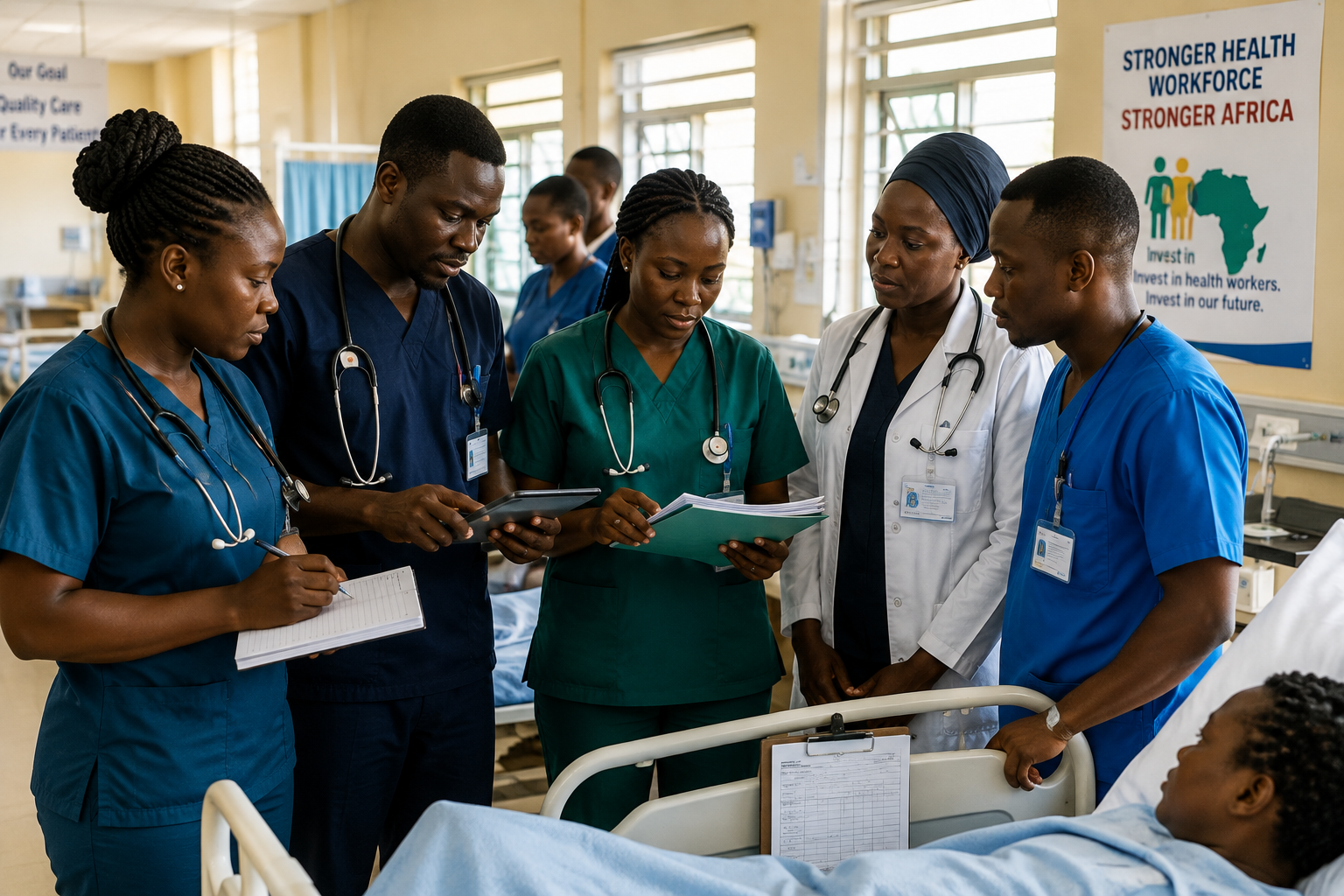
African countries have made a major commitment to address one of the continent’s persistent healthcare challenges: ensuring that enough qualified health professionals are available where patients need them.
On August 26, African health ministers endorsed the Africa Health Workforce Agenda 2026–2035, committing countries to plan, educate, employ and retain 3 million additional health workers by 2035.
The agreement was adopted during the 76th session of the WHO Regional Committee for Africa.
Africa’s Healthcare Workforce Gap
WHO estimates that the African Region had approximately 5.72 million health workers in 2024, but this represented only about 46% of the workforce required to meet the region’s healthcare needs.
Without substantial action, WHO projects that Africa could face a shortage of more than 6 million health workers by 2035.
However, the problem is more complicated than simply training additional doctors, nurses and other healthcare professionals.
WHO estimates that approximately one million trained health professionals are unemployed across the region. In several countries, more than half of newly qualified nurses, doctors and midwives have difficulty securing employment soon after graduation.
This creates a striking situation in which healthcare facilities can experience serious staffing shortages while trained professionals remain unemployed.
Beyond Training More Healthcare Workers
The new workforce agenda therefore moves beyond simply increasing the number of people entering health-professional education.
It calls for countries to improve:
- Workforce planning
- Quality health-professional education
- Employment opportunities
- Sustainable healthcare financing
- Distribution of healthcare workers
- Retention of qualified professionals
The strategy also encourages cooperation between health, education, finance, labour and public-service authorities.
Why It Matters
A sufficient and well-distributed healthcare workforce is essential for improving access to primary care, maternal and child health services, emergency care, disease prevention and management of chronic illnesses.
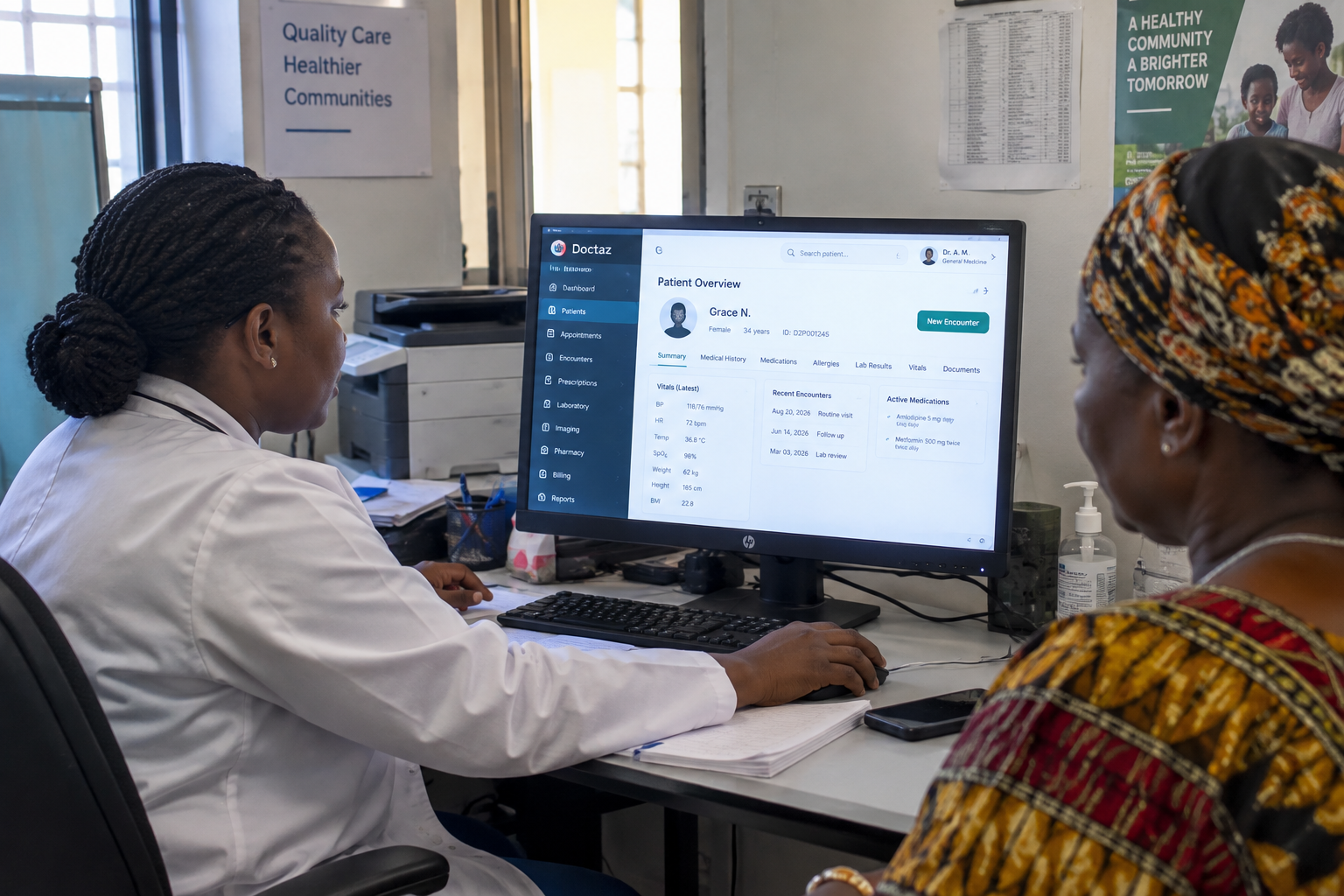
Digital health may also become increasingly important as the workforce expands. Electronic health records, telemedicine, clinical communication platforms, scheduling systems and health-data infrastructure can help healthcare professionals coordinate care and extend services to underserved communities.
Africa’s challenge therefore involves not only producing more healthcare professionals, but also creating sustainable jobs, retaining skilled workers and providing them with the infrastructure needed to deliver quality care.
The Africa Health Workforce Agenda 2026–2035 represents an important continental commitment toward achieving that goal.
Doctaz Healthcare News will continue to follow Africa’s healthcare workforce transformation and the policies and technologies shaping the future of healthcare delivery across the continent.