Across Africa, healthcare is becoming increasingly digital. Electronic health records, telemedicine, mobile health applications, digital prescriptions and health information exchanges are creating new opportunities to improve how healthcare is delivered.
But digitalization alone is not enough.
A patient may receive care at one hospital, undergo laboratory testing at another facility, purchase medications from a separate pharmacy and later visit a specialist elsewhere. When these systems cannot communicate, important health information may not follow the patient.
The future of digital healthcare in Africa therefore depends not only on creating electronic records, but on connecting healthcare information securely across the continuum of care.
The Challenge of Fragmented Health Information
Fragmented health information remains an important challenge across the continent.
The World Health Organization (WHO) Regional Office for Africa identifies fragmentation across health data systems, limited interoperability and weaknesses in data governance as factors contributing to the underuse of health information. WHO reports that the overall maturity of health information systems in the African Region is currently about 58%, classified as an early stage of maturity.
When medical information is fragmented, healthcare professionals may not have immediate access to a patient’s previous diagnoses, medications, allergies, laboratory results or treatment history.
Connected medical records can help address this problem.
What Does a Connected Health System Look Like?
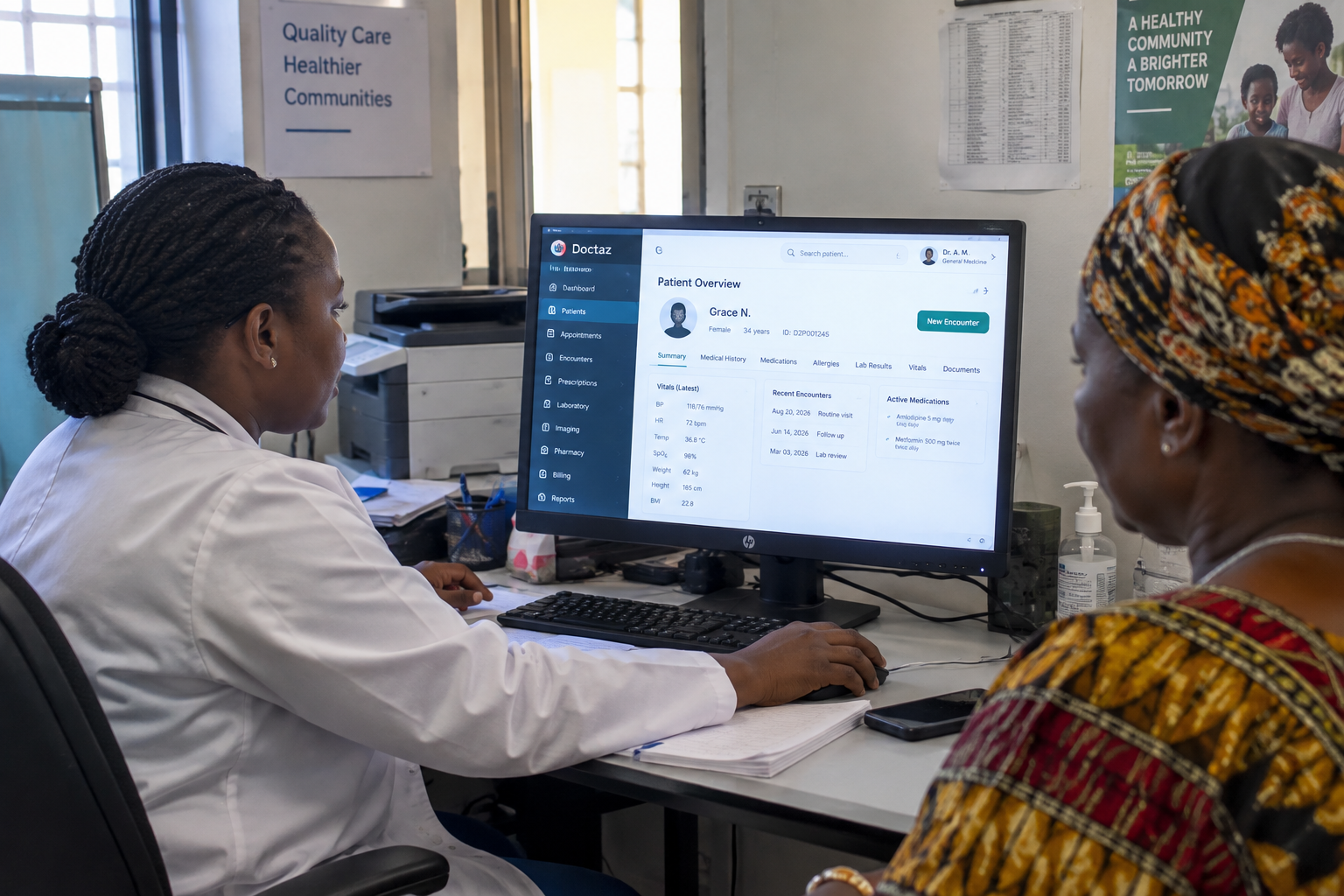
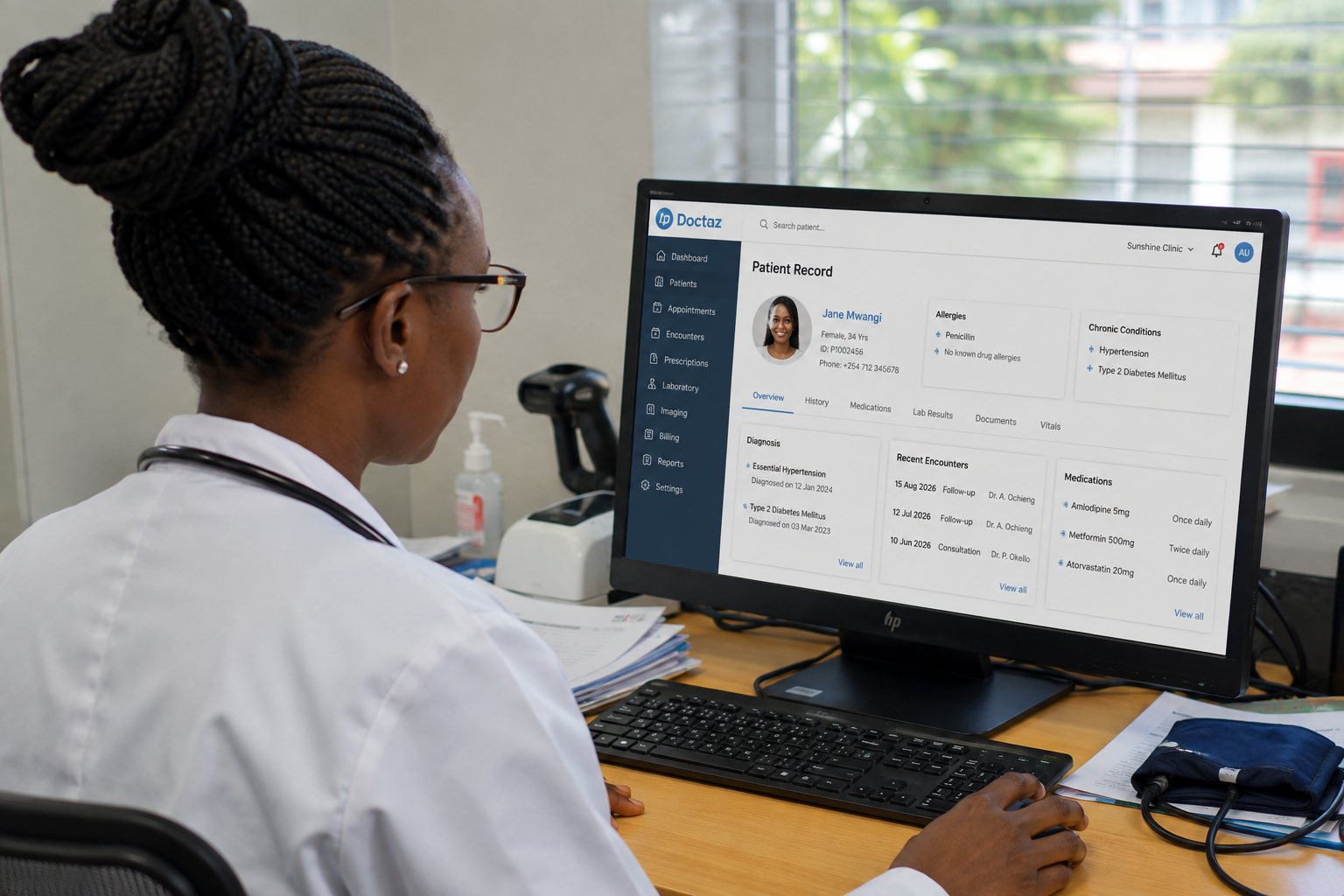
In a connected healthcare environment, authorized healthcare professionals can securely access relevant patient information when it is needed for care.
For example, a physician could review previous laboratory results before ordering another test. A pharmacist could receive an electronic prescription directly from a healthcare provider. A specialist receiving a referral could have access to relevant clinical information, while patients could have greater access to their own health information.
This is where interoperability becomes important. Interoperability allows different healthcare information systems to exchange and appropriately use health information.
WHO promotes interoperability and data-sharing standards as important components of digital health, while its strategy for routine health information systems calls for integrated and interoperable health information systems.
Africa Is Moving Toward Digital Primary Healthcare
The movement toward connected healthcare is already gaining momentum.
In April 2026, Africa CDC announced progress on its Primary Health Care Digitalisation Framework, a continental roadmap intended to connect communities, healthcare workers, health facilities and policymakers through interoperable digital systems.
Africa CDC has set an ambitious goal of digitizing 90% of primary healthcare systems across Africa by 2035.
The framework includes concepts such as unique health identifiers, digital registries, national data platforms and interoperable digital infrastructure.
These developments suggest that digital health is increasingly becoming part of the continent’s broader healthcare infrastructure rather than simply a collection of isolated technology projects.
Why Connected Records Matter
Connected medical information could provide several important benefits.
Better continuity of care: Relevant medical information can accompany patients as they move between healthcare providers and facilities.
Improved patient safety: Access to information such as allergies, medications and previous treatment can support better-informed clinical decisions.
Reduced duplication: Healthcare professionals may be able to identify previously completed laboratory tests, imaging and other investigations before ordering additional services.
Better referrals: Relevant patient information can move more efficiently between primary care providers, specialists and hospitals.
Stronger public health information: Appropriately governed health data can support disease surveillance, healthcare planning and informed allocation of resources.
Greater patient participation: Digital systems can provide patients with greater access to their health information and help them participate more actively in their care.
Technology Alone Is Not the Answer
Building connected healthcare systems will require more than purchasing software.
Healthcare organizations and governments must address data privacy, cybersecurity, interoperability standards, infrastructure, reliable connectivity, workforce training, financing and digital literacy.
Systems must also be designed around the realities of African healthcare environments rather than simply importing models developed for other healthcare systems.
Africa CDC’s Digital Transformation Strategy recognizes this opportunity and includes initiatives aimed at connecting health facilities, accelerating primary healthcare digitalization and supporting African health technology innovation.
The Road Ahead
Africa has an opportunity to build healthcare systems where information moves more effectively with the patient.
The goal should not simply be to replace paper records with electronic ones. The greater opportunity is to create a healthcare ecosystem where the right information can securely reach the right healthcare professional at the right time, wherever the patient receives care.
Connected medical records could become an important foundation for safer care, better coordination, stronger health systems and a more digitally connected African healthcare future.
At Doctaz, we believe that connecting healthcare information, providers and patients will be an important part of that transformation.
References
Africa Centres for Disease Control and Prevention (Africa CDC)
Primary Healthcare Digital Transformation Gains AU and Partner Support
Africa Centres for Disease Control and Prevention (Africa CDC)
Digital Transformation Strategy
World Health Organization Regional Office for Africa
Health Information System
World Health Organization
Digital Health