A Practical Guide for Healthcare Organizations
KEY TAKEAWAY
Choosing the right Electronic Health Record (EHR) system is one of the most important decisions a healthcare organization can make. The right platform should improve patient care, simplify daily operations, support future growth, and adapt to the way your organization works. Healthcare organizations are increasingly adopting digital technologies to improve efficiency, strengthen patient safety, and enhance the patient experience. At the center of this transformation is the Electronic Health Record (EHR).
However, with many EHR systems available, selecting the right one can be challenging. Understanding what to look for before making a decision can help ensure successful implementation and long-term value.
What Is an Electronic Health Record?
An Electronic Health Record (EHR) is a digital version of a patient’s medical record. It stores clinical and administrative information in one secure system, allowing authorized healthcare professionals to access patient information when needed.
An EHR may include:
• Patient demographics
• Medical history
• Diagnoses
• Medications
• Allergies
• Laboratory results
• Clinical notes
• Imaging reports
• Treatment plans
Unlike paper records, an EHR makes patient information easier to access, update, and share among authorized members of the care team.
Why Choosing the Right EHR Matters
An EHR becomes part of nearly every aspect of healthcare delivery.
The right system can help organizations:
• Improve workflow efficiency
• Reduce administrative work
• Support better clinical decisions
• Improve communication among care teams
• Enhance patient satisfaction
• Prepare for future growth
Choosing the wrong system may result in staff frustration, inefficient workflows, and unnecessary costs.
Start by Understanding Your Organization’s Needs
Before evaluating different EHR platforms, identify what your organization needs.
Consider questions such as:
• How many providers will use the system?
• What services do you offer?
• Will multiple locations use the system?
• Do you currently use paper records?
• What daily challenges are you trying to solve?
Look for a User-Friendly Interface
Healthcare professionals spend a significant portion of their day documenting patient care.
An EHR should be easy to learn and simple to navigate.
Look for a system that allows users to:
• Find patient records quickly
• Complete documentation efficiently
• Reduce unnecessary clicks
• Navigate between screens without confusion
Evaluate Core Clinical Features
Every healthcare organization has different requirements, but most EHR systems should include essential clinical functions.
Look for features such as:
• Electronic patient records
• Clinical documentation
• Medication management
• Electronic prescribing
• Laboratory and imaging results
• Allergy documentation
• Care plans
• Referral management
Consider Appointment Scheduling
Scheduling is often the first interaction patients have with a healthcare organization.
A modern EHR should provide scheduling tools that help staff:
• Book appointments efficiently
• Reduce scheduling conflicts
• Send appointment reminders
• Manage provider calendars
• Track patient visits
Make Sure the System Supports Telehealth
Telehealth has become an important part of healthcare delivery.
If your organization offers virtual care or plans to do so, consider whether the EHR includes:
• Secure video consultations
• Virtual appointment scheduling
• Online patient communication
• Digital documentation during visits
Prioritize Data Security
A reliable EHR should include security features such as:
• User authentication
• Role-based access
• Data encryption
• Audit logs
• Secure backups
Look for Reporting and Analytics
Reporting tools can help organizations:
• Monitor patient volume
• Track clinical performance
• Measure operational efficiency
• Support quality improvement initiatives
• Generate management reports
Consider Scalability
Choose an EHR that can grow with your organization by supporting additional providers, multiple locations, expanded services, and increased patient volume.
Evaluate Customer Support and Training
Ask potential vendors about:
• Staff training
• Technical support
• Implementation assistance
• System updates
• Ongoing customer service
Questions to Ask Before Choosing an EHR
• Does the system fit our workflow?
• Is it easy for staff to learn?
• Can it support future growth?
• Does it include telehealth?
• Does it offer electronic prescribing?
• Are reporting tools included?
• How is patient data protected?
• What training and support are available?
How Doctaz Supports Healthcare Organizations
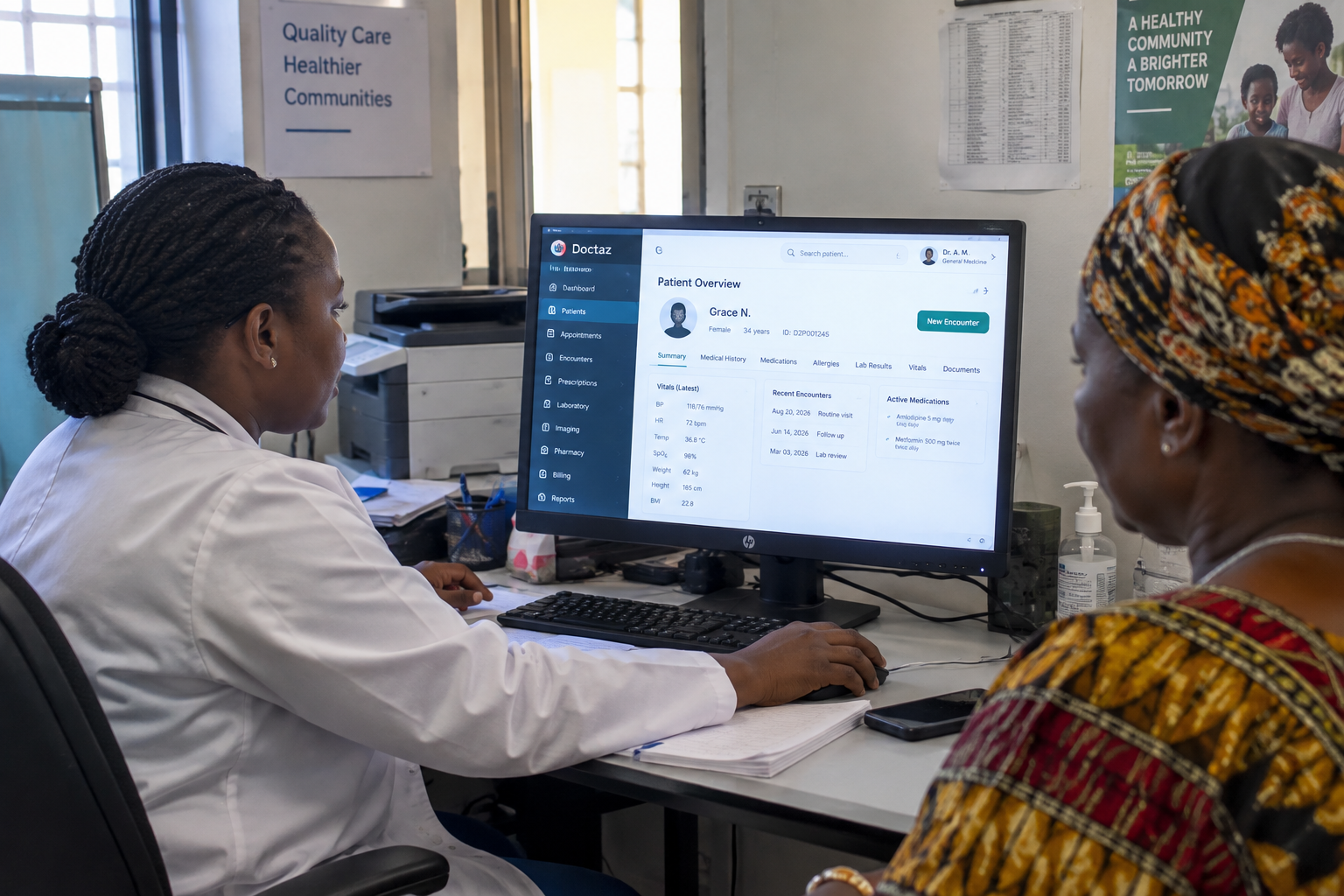
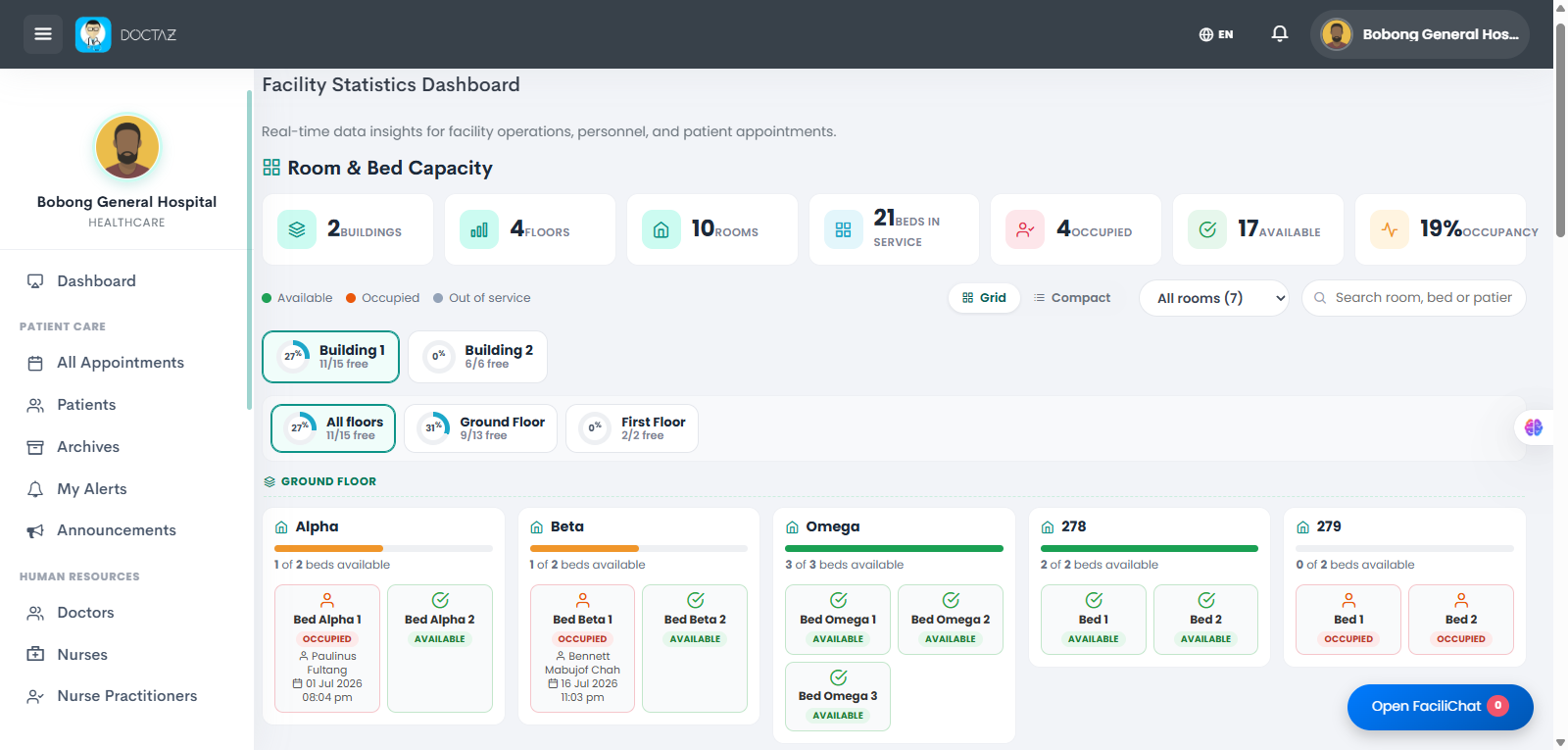
Doctaz helps healthcare organizations simplify clinical and administrative workflows through one connected platform. The platform includes Electronic Health Records, appointment scheduling, clinical documentation, electronic prescribing, telehealth, billing support, patient communication, and reporting and analytics.
Final Thoughts
Choosing an Electronic Health Record system is a long-term investment that affects providers, staff, and patients every day.
The best EHR is not necessarily the one with the most features—it is the one that fits your organization’s workflow, supports quality care, and grows with your needs.
READY TO FIND THE RIGHT EHR FOR YOUR ORGANIZATION?
Discover how Doctaz can help your healthcare organization simplify operations, improve patient care, and support long-term digital transformation.
Doctaz — Connecting Care. Transforming Medical Records.